African Cichlid Water Chemistry: pH, dKH & Buffering
How to set water chemistry for African cichlids — target pH 7.8-8.6, dKH/dGH ranges, crushed coral substrate, and Seachem cichlid buffers.
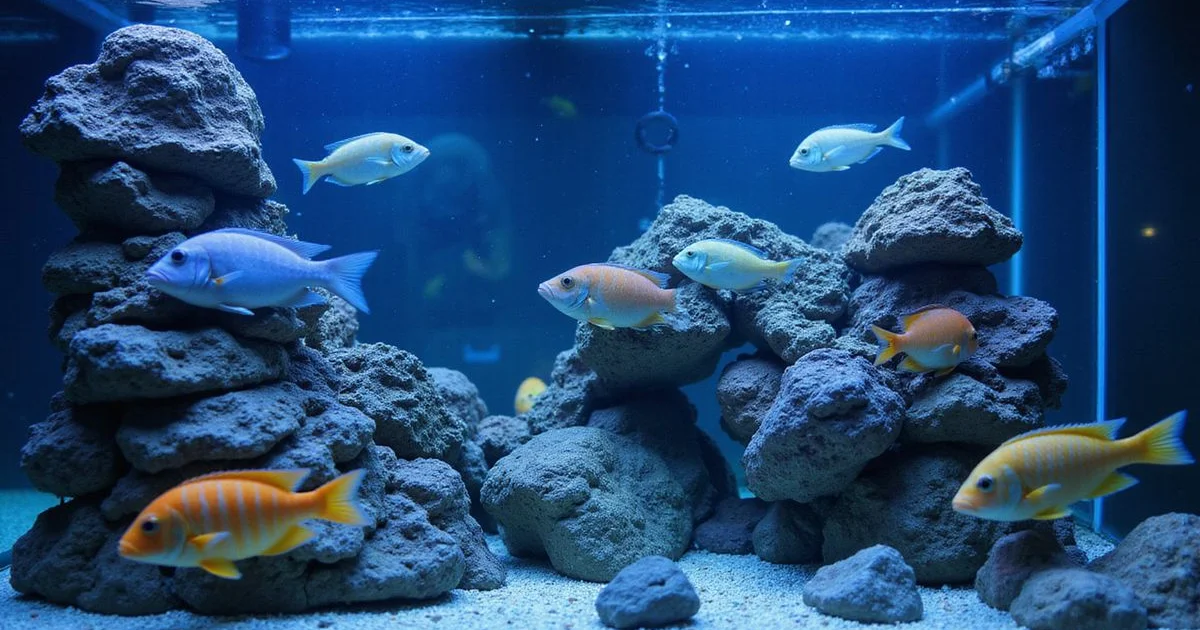
For a related deep dive, read our African vs South American cichlids. Goal: Give concrete parameter targets and the buffering products that hit them, reinforcing free testing.
You already know that African cichlids demand specific water conditions, but pinning down exact numbers can feel like chasing a moving target. Before modifying any parameters, start with our parent guide on Cichlids for a complete species overview. Getting your core chemistry right is the difference between thriving, colorful fish and constant health struggles.
We often see local hobbyists struggle with fluctuating chemistry before they understand the role of proper buffering. This happens because most standard aquarium advice caters to soft-water community fish.
Let’s look at the exact parameters your African cichlids need, what actually works for active buffering, and how to manage your water source effectively.
Target ranges
Our recommended baseline for African cichlids is a pH of 7.8 to 8.6, a dKH of 10 to 20, and a dGH of 12 to 20. Hitting these exact numbers provides the stability these fish experience in their natural rift lake habitats.
You will notice slight differences depending on which specific lake your fish originate from. Lake Tanganyika cichlids require the hardest and most alkaline water, often thriving near a pH of 9.0. Lake Malawi and Lake Victoria species are slightly more forgiving but still require significantly harder water than standard tap provides.
| Lake | Target pH | Target dKH | Target dGH |
|---|---|---|---|
| Malawi | 7.8 - 8.4 | 10 - 15 | 12 - 16 |
| Tanganyika | 8.0 - 9.0 | 12 - 20 | 14 - 20 |
| Victoria | 7.8 - 8.4 | 10 - 15 | 12 - 16 |
Maintaining these levels consistently prevents osmotic stress and disease. We strongly recommend testing your baseline tap water before making any adjustments. A solid baseline tells you exactly what you need to change.
Crushed coral substrate as a slow-release buffer
A crushed coral substrate acts as an excellent slow-release buffer that naturally holds your pH around 7.8 to 8.0. The calcium carbonate slowly dissolves into the water column as acid levels rise.
We typically recommend adding one pound of a high-quality aragonite product, like CaribSea Florida Crushed Coral, per 10 gallons of aquarium volume. This amount provides enough surface area to maintain a steady carbonate hardness over several months.
Many hobbyists mistakenly assume crushed coral lasts forever. The reality is that the buffering capacity diminishes over time as the minerals dissolve and a biofilm coats the pieces. You should plan to replace a portion of your crushed coral every six to twelve months to maintain consistent buffering power.
Our team always reminds customers that crushed coral requires proper maintenance to work effectively. A few simple strategies will keep your water chemistry stable:
- Not rinsing thoroughly: Aragonite dust will cloud your tank for days if not rinsed aggressively in a bucket first.
- Ignoring flow: The buffering effect works best when placed in high-flow areas, like directly inside your canister filter or sump.
- Expecting rapid changes: Crushed coral is a slow-release method and will not immediately fix a severe pH crash.
Seachem cichlid buffers (alkaline + buffer) for active management
Seachem cichlid buffers provide active management by immediately raising your pH and carbonate hardness to the precise levels required by rift lake species. These products are formulated as specific blends of carbonate salts to mimic exact natural environments.
We use Seachem Malawi/Victoria Buffer extensively in our store to lock in a pH between 7.8 and 8.4. The standard dosing protocol requires one level teaspoon, roughly 6 grams, for every 10 to 20 US gallons of water.
You dose this powder daily until you hit your target pH, and then use it only during scheduled water changes. It is crucial to understand the functional difference between adjusting pH and remineralizing.
Here are common active buffering mistakes to avoid:
- Chasing a perfect number: Focus on keeping a steady pH of 8.0 rather than drastically altering your water every day to hit exactly 8.2.
- Confusing KH with GH: Adding a buffer increases your carbonate hardness, but you still need a dedicated cichlid salt to raise your general hardness.
- Dosing directly into the tank: Always dissolve the powdered buffer in a small cup of aquarium water before pouring it into your system.
You must also use a remineralizing salt, like Seachem Cichlid Lake Salt, to raise your general hardness. This two-part approach ensures your fish have both the correct pH and the essential trace minerals they need to thrive.
Differences from soft-water community parameters (and why species don’t mix)
African cichlids require dramatically harder and more alkaline water than soft-water community fish like tetras, corydoras, and angelfish. Attempting to mix these species guarantees that at least one group will suffer from severe physical stress.
Our typical Amazon community tank targets a pH between 6.5 and 7.5, with a much lower general hardness of 4 to 8 dGH. African rift lake waters are on the complete opposite end of the spectrum.
When a soft-water fish is placed in a hard-water cichlid tank, their kidneys must work overtime to process the excess calcium and magnesium. This osmotic shock quickly leads to lethargy, faded colors, and a shortened lifespan.
| Parameter | African Cichlid Tank | Amazon Community Tank |
|---|---|---|
| pH Level | 7.8 to 9.0 | 6.5 to 7.5 |
| General Hardness (dGH) | 12 to 20 | 4 to 8 |
| Carbonate Hardness (dKH) | 10 to 20 | 4 to 10 |
Keeping these environments completely separate is the only way to ensure both types of fish remain healthy. A dedicated tank allows you to match the water chemistry exactly to what the species needs.
When to RO/DI and re-mineralize vs just dose tap
You must switch to a Reverse Osmosis Deionization system and remineralize your water if your local municipal supply contains high levels of uncontrollable contaminants like nitrates, phosphates, or heavy metals. If your tap water is relatively clean and hard, simply treat it with a high-quality dechlorinator.
We evaluate local water quality constantly, and the 2026 data for Sarasota tap water shows elevated levels of several unwanted contaminants despite having a naturally hard profile from the Floridan aquifer. For hobbyists dealing with similar municipal water challenges, an RO/DI unit provides a completely clean slate. Here is when you should make the switch:
- High municipal nitrates: If your tap water tests above 10 ppm for nitrates right out of the faucet, an RO/DI system is essential.
- Chloramine usage: Many cities now use chloramines instead of standard chlorine, requiring extensive carbon filtration to remove safely.
- Unpredictable seasonal changes: Agricultural runoff can dramatically alter your tap water chemistry during heavy spring rains.
A reliable entry-level unit, like the BRS 4-Stage Value RO/DI System, typically costs around $200 to $250. This investment strips your tap water down to zero total dissolved solids.
Once you have pure water, you must rebuild the mineral profile completely using cichlid salts and buffers. Dosing tap water directly is much cheaper and easier, but it requires you to test frequently to prevent shocking your fish.
Our Sarasota store at 2847 Bee Ridge Road is built for hobbyists who want real answers, not sales pressure. Marcus Chen opened Gulf Coast Aquatics in 2019 after 25+ years in the hobby and years managing big-box aquarium departments. Every fish is quarantined two weeks. Every saltwater species gets reef-safe labeling. And if your water chemistry is off, we’ll tell you before you buy livestock.
If you are here because you are an intermediate hobbyist setting up an African cichlid tank and need concrete parameter targets, you’re in the right place. Bring a water sample anytime for free testing for ammonia, nitrite, nitrate, pH, alkalinity, calcium, magnesium, and marine salinity.
Results take about ten minutes, and we’ll explain what is likely driving your issue in plain language.
Practical next steps
- Test your water (free in store, see our free water testing page).
- Match livestock to your actual parameters, not forum guesses.
- Ask us before you buy, we’ll tell you if something won’t work in your tank.
Visit Gulf Coast Aquatics
2847 Bee Ridge Road, Sarasota FL 34239 · (941) 555-0178 · Open Mon-Sat 10-6, Sun 12-5.
Frequently asked questions
Can I use baking soda to raise pH? ▼
It works short-term but swings the chemistry. Dedicated buffers like Seachem Tanganyika are more stable.
What if my pH stays low even with crushed coral? ▼
Soft RO/DI source water plus aragonite substrate plus buffer is the reliable stack. Bring a sample in.
Do all African cichlids need hard alkaline water? ▼
The big three lakes (Malawi, Tanganyika, Victoria) yes. West African species differ — ask before buying.
Ready for the next step?
Browse our Cichlids selection in store or ask us in person at Bee Ridge Road.
View Cichlids