Florida Summer Pond Care: Keeping Koi & Goldfish Alive
How to keep pond koi and goldfish alive in Florida's brutal summer — oxygen, aeration, shading, summer feeding, and heron prevention.
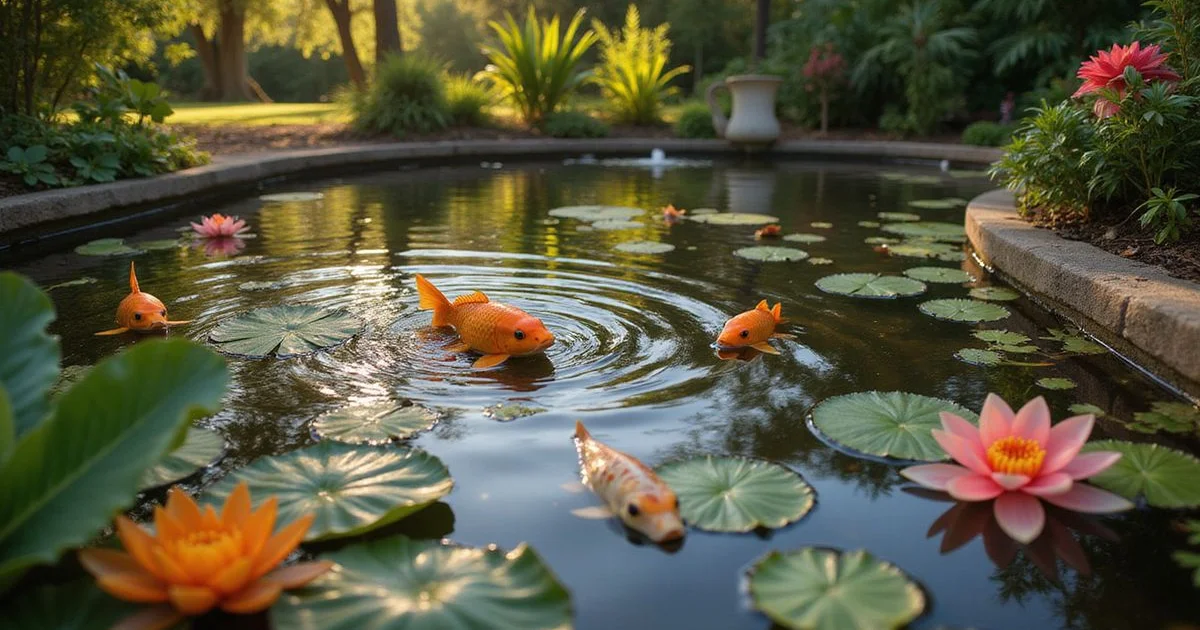
For a related deep dive, read our how many fish per gallon. We know exactly how fast a shallow backyard water feature can turn into a danger zone during a humid July afternoon. Surface temperatures often spike into the low 90s, completely changing the chemistry your livestock rely on.
This thermal shift causes unseen biological stress that catches many hobbyists off guard.
Our team has handled countless emergency calls about gasping koi, and it almost always comes down to oxygen saturation. The regional florida pond fish summer heat requires specific, concrete actions to prevent disaster.
This guide will cover everything from bottom-diffused circulation to native shade planting, ensuring your Pond Fish thrive instead of just surviving.
Heat-induced oxygen depletion (warm water holds less O2), the top florida pond fish summer heat killer
We constantly remind local hobbyists that warm water physically cannot hold as much dissolved oxygen as cool water. A sudden temperature spike literally cooks the life-sustaining gasses right out of the environment.
This drop is the primary reason you see livestock gasping at the surface on hot August afternoons. Our daily water tests show that saturated oxygen often drops below the critical 5 parts per million threshold during these heatwaves.
University of Florida researchers warn that anything below 2 parts per million causes immediate, catastrophic loss. Your biological filters also consume massive amounts of oxygen to process waste, creating a dangerous double-draw.
| Dissolved Oxygen Level | Impact on Koi and Goldfish |
|---|---|
| Above 5 ppm | Healthy baseline for active feeding and strong immune function. |
| 3 to 4 ppm | Moderate stress, sluggish movement, and reduced appetite. |
| Below 2 ppm | Critical danger zone leading to immediate fish kills. |
We highly recommend measuring your levels just before dawn, which is when saturation hits its absolute lowest point. Early morning testing gives you the most accurate read on whether your system is suffocating overnight. Getting ahead of this invisible threat is the only way to prevent a total ecosystem crash.
Aeration upgrades
Our technicians always inspect existing air pumps first when diagnosing an overheated setup. Standard fountain heads might look nice, but they only pull water from the top six feet of the column. This shallow draw leaves the bottom layers completely stagnant, creating toxic pockets of warm, oxygen-depleted sludge.
We prefer high-volume bottom-diffused aerators like the Airmax or Scott Aerator systems for deep installations. These units pump air directly to diffuser plates resting on the floor, forcing cooler bottom water up to the surface. The resulting circulation breaks up the thermal stratification and drastically improves gas exchange at the top.
Our service plans suggest running these systems 24 hours a day during the peak season. Your beneficial bacteria rely entirely on this constant oxygen supply to process ammonia safely. Even a short power outage can crash the biofilter if you lack adequate circulation.
Sizing your air pump correctly
We use a simple rule of thumb for finding the right capacity. You need an air pump capable of turning over your entire total volume at least once per hour. Many entry-level kits max out at 500 gallons per hour, which falls dangerously short for a typical 2,000-gallon habitat.
Our crew upgrades these underpowered units to commercial-grade models pushing 40 to 60 liters per minute. Adding multiple large airstones across different zones ensures no dead spots remain. Proper sizing guarantees your aquatic life has enough breath even on a stagnant, windless day.
- Diffuser plates: Swap out small air stones for 9-inch rubber membrane diffusers.
- Airline tubing: Upgrade to weighted, half-inch tubing so the lines sink neatly.
- Waterfall flow rate: Clear out algae buildup in the spillway to ensure a wide, thin sheet of water.
Shading strategies
We prioritize shade because blocking direct sunlight is the easiest way to drop the temperature. Just a few hours of intense midday UV exposure can raise a shallow basin by five to ten degrees. Plants act as natural umbrellas while simultaneously absorbing the excess nutrients that cause green water blooms.
Our designs strongly encourage adding native species like the American White Waterlily or Yellow Pond Lily. These large floaters should cover roughly 40 to 60 percent of the total surface area by mid-July. Native marginal plants like Pickerelweed also cast excellent shadows from the shallow shelves.
We often install UV-resistant shade cloths for immediate relief over exposed, newly built water features. A standard 80-percent block sail canopy suspended overhead lowers the water temperature dramatically within a single afternoon. Smart location planning during the initial dig, like positioning the layout near a mature oak, is the best long-term defense.
- Native floating plants: Use fragrant water lilies to naturally cool the surface.
- Strategic sail canopies: Suspend a breathable shade cloth high enough to allow wind flow.
- Natural topography: Plant tall bamboo on the western edge to block afternoon glare.
Summer feeding adjustments, less protein, more vegetable-based food
Our staff frequently sees hobbyists making major mistakes with their koi summer care during intense heatwaves. A koi’s digestive tract slows down drastically once the water climbs above 86 degrees Fahrenheit. Rich, heavy pellets sit undigested in the gut, potentially causing severe internal infections.
We immediately switch to a highly digestible, wheat-germ-based formula like Hikari Wheat-Germ. These vegetable-heavy diets pass through the system easily without straining the animal. The lower protein content also prevents toxic ammonia spikes if uneaten food decays.
| Water Temperature | Feeding Strategy |
|---|---|
| 68°F to 85°F | Normal feeding 2-4 times daily with growth or color-enhancing pellets. |
| 86°F to 89°F | Reduce to 1-2 small feedings using a low-protein, wheat-germ base. |
| 90°F and above | Stop feeding entirely; fish will naturally graze on algae without added stress. |
Our guides advise testing your temperature with an accurate digital thermometer before tossing in a handful of pellets. Guessing the conditions by checking the air temperature leads to terrible miscalculations. A brief fasting period during a heatwave is far safer than a heavy meal.
Heron and raccoon pressure, netting and decoys for Florida pond owners
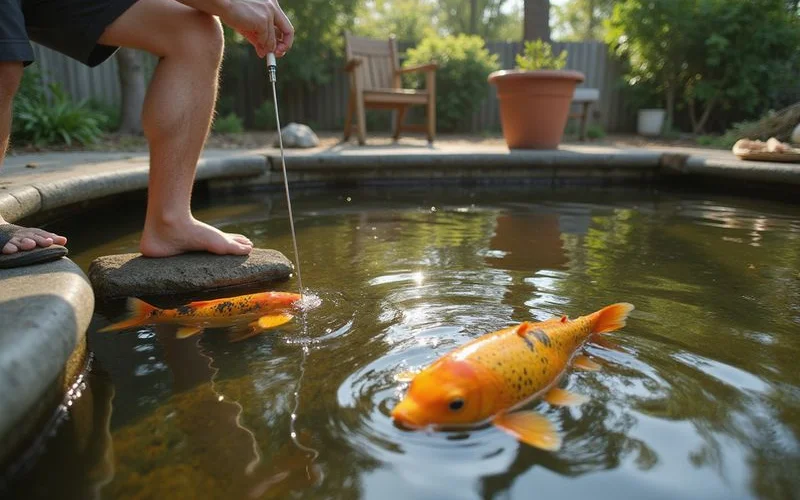
We regularly field emergency calls from devastated owners who lost their prized 20-year-old koi overnight. Great Blue Herons and clever raccoons treat any shallow goldfish pond florida setup like an all-you-can-eat buffet. A hungry bird will patiently stalk the edge for hours before striking with incredible speed.
Our blueprints always recommend keeping steep sides and a depth of at least 3 feet to stop raccoons from wading in. Raccoons lack the ability to grab swimming prey if they cannot touch the bottom. Herons, however, will easily pluck a target from above if the surface is unprotected.
We use heavy-duty barriers, like Aquascape Protective Pond Netting, suspended at least one foot above the water line. Laying the mesh directly on the surface allows a heron to simply stab right through the gaps. Adding an underwater sanctuary, such as a pre-built fish cave, gives your pets a safe place to retreat.
Setting up effective netting
Our technicians use a specific method to secure the mesh so it looks clean and stays tight. A sagging cover traps debris and looks terrible in a landscaped yard. Proper tension is the secret to a professional appearance.
- Anchor points: Drive heavy-duty stakes into the surrounding soil every two feet.
- Elevation lines: Run a length of high-test fishing line across the center.
- Edge blending: Hide the perimeter stakes under river rock or creeping ground cover.
We built our Sarasota store at 2847 Bee Ridge Road for hobbyists who want real answers, not sales pressure. Marcus Chen opened Gulf Coast Aquatics in 2019 after 25 plus years in the hobby and years managing big-box aquarium departments. Every single fish is quarantined for two full weeks before going up for sale.
Our facility ensures every saltwater species gets clear reef-safe labeling. If your water chemistry is off, the staff will warn you before you buy any livestock. Any Sarasota pond owner watching summer temps spike and worrying about fish loss is in the right place.
We invite you to bring a water sample anytime for a complete diagnostic check. The free testing covers ammonia, nitrite, nitrate, pH, alkalinity, calcium, magnesium, and marine salinity. Results take about ten minutes, and you get an explanation of what is likely driving your issue in plain language.
Practical next steps
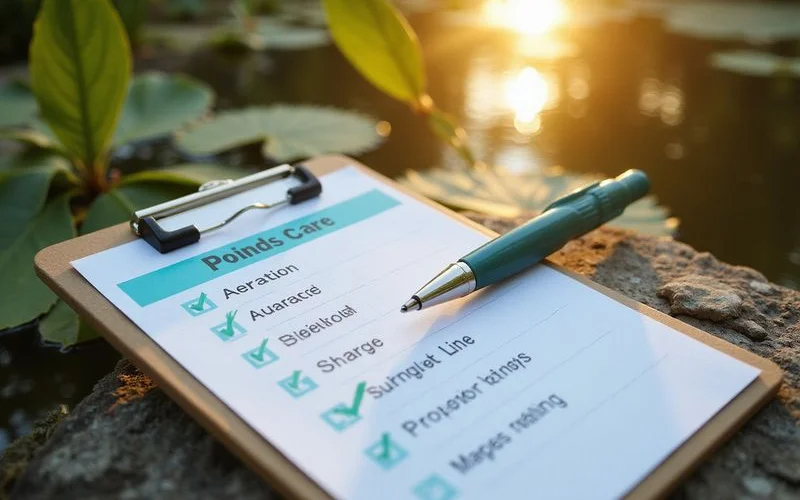
Our team highly recommends taking action before the August humidity reaches its peak. Waiting until you see physical distress signs usually means the biological damage is already done. A proactive approach saves money and prevents heartbreak.
- Test your water frequently and visit our free water testing page to see the full menu of services.
- Match your new livestock to your actual parameters, rather than relying on forum guesses.
- Ask the counter staff before you buy, as a quick conversation can stop you from putting a sensitive species in a stressful tank.
We provide free in-store diagnostics to give you a precise baseline to work from. Bring a clean jar of your water straight to the counter. Finding the right balance takes the guesswork out of summer maintenance.
Visit Gulf Coast Aquatics
Our shop is fully stocked and ready to help you prepare your setup for the harsh season. The store is located at 2847 Bee Ridge Road, Sarasota FL 34239. You can reach the front desk directly by calling (941) 555-0178 during normal hours.
We keep the doors open Monday through Saturday from 10 AM to 6 PM, and Sunday from 12 PM to 5 PM. A quick visit can completely transform how you manage your outdoor habitat. Stop by this weekend to see the equipment in action.
Our staff wants your approach to florida pond fish summer heat to be bulletproof this year. Grab a water sample and come chat with a professional today. Proper preparation keeps your backyard oasis beautiful and relaxing all year long.
Frequently asked questions
Should I run my pond pump 24/7 in summer? ▼
Yes — and consider adding a backup air pump on a battery for power outages. Oxygen drop kills fast.
Do koi need shade? ▼
Yes — sustained water temps over 85°F stress koi. Aim for at least 30-40% surface coverage with plants or shade.
Can I bring my pond fish indoors for summer? ▼
Possible for small ponds, but the bigger fix is fixing the pond — aeration and shade scale better.
Ready for the next step?
Browse our Pond Fish selection in store or ask us in person at Bee Ridge Road.
View Pond Fish