How Many Freshwater Fish Per Gallon? (And Why the Rule Lies)
Real freshwater stocking guidance by tank size — why 'inch per gallon' is wrong, bioload basics, examples for 10g/20g/55g tanks.
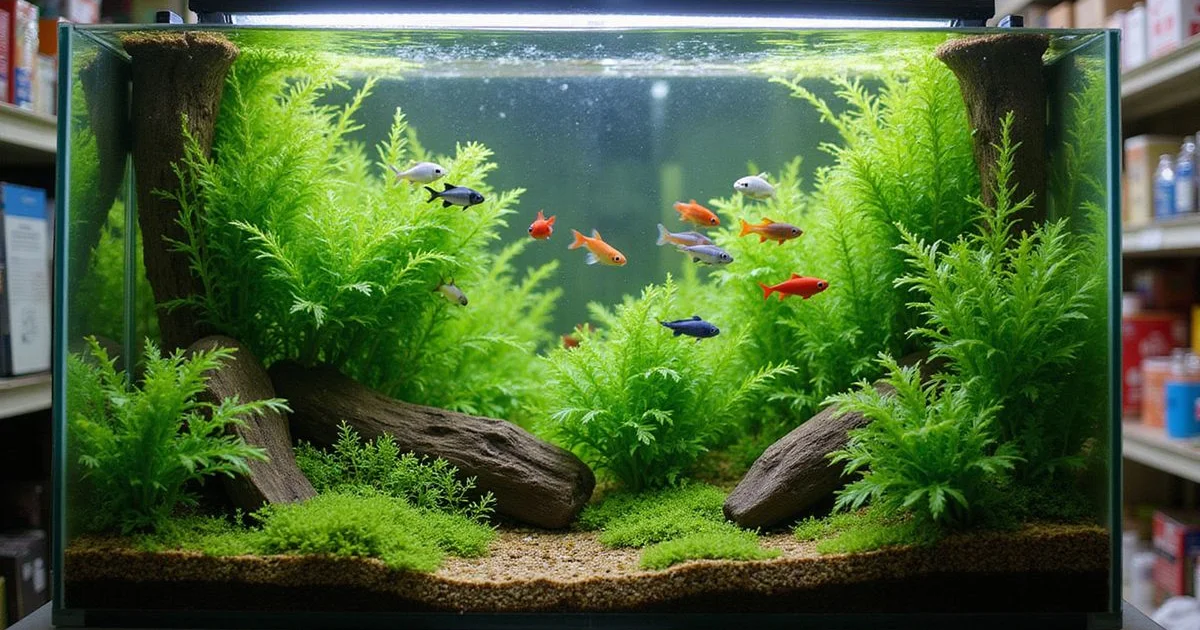
For a related deep dive, read our freshwater fish compatibility guide. If you spend any time reading forums about aquariums, you know the question of how many freshwater fish per gallon is repeatedly asked. We see the consequences of this outdated advice every week when frustrated hobbyists come into our shop with crashing water parameters. It sounds like a logical mathematical formula, but it completely ignores how different species actually process food and produce waste.
Our team always recommends starting with our foundational guide on setting up Freshwater Tropical Fish tanks before making any livestock purchases.
This foundational knowledge makes calculating your true stocking capacity much easier. Let’s break down why measuring bioload is the safest approach for your tank, examine the filtration factors that matter, and look at realistic stocking templates you can copy.
Why the ‘inch per gallon’ rule is wrong (a 10in pleco has 50x the bioload of 10 neon tetras)
The inch-per-gallon rule is entirely wrong because it treats a one-inch neon tetra and a one-inch baby cichlid as equal producers of waste. This flawed logic fails rapidly as fish grow in mass, thickness, and appetite.
A common plecostomus is frequently sold at big-box pet stores as a tiny two-inch algae eater. We constantly warn customers that these adorable bottom-dwellers grow to a massive 18 to 24 inches in adulthood.
The inch-per-gallon rule only works for very small, slender fish like tetras, rasboras, and guppies that stay under two inches.
Our store rescues these overgrown giants nearly every month from well-meaning hobbyists who followed the inch-per-gallon myth. Mass increases cubically as a fish grows longer. A fish that doubles in length is actually eight times heavier and eats eight times more food.
Bioload as the real measure
Bioload is the actual total demand placed on your aquarium ecosystem by its inhabitants. This measurement accounts for fish size, behavior, metabolic rate, and the resulting waste output.
Goldfish are notorious for having incredibly high bioloads compared to tropical fish of the exact same size. We always explain that goldfish lack a true stomach, meaning food passes directly through their digestive tract rapidly. They process and excrete waste continuously as they forage.
Our water tests consistently show that a single fancy goldfish produces up to three times the ammonia of a similarly sized tropical cichlid. This high waste output requires significantly more dilution to keep the water safe and prevent severe aquarium overstocking.
Evaluating bioload means looking at four critical factors:
- Adult Fish Size: Plan for how massive the fish will be at full maturity, not just its current store size.
- Diet and Metabolism: Carnivorous fish and heavy plant-eaters create thicker, more toxic waste than micro-predators.
- Swimming Behavior: Active schooling species burn more energy, eat more frequently, and generate higher oxygen demand.
- Filtration Capacity: Your equipment must be able to rapidly convert toxic ammonia into safer compounds.
Surface area and filtration capacity, the limiting factors
Your tank’s true stocking limit is entirely determined by the surface area available for beneficial bacteria to colonize. These microscopic colonies process all the toxic ammonia generated by your fish’s bioload.
Two specific types of bacteria, Nitrosomonas and Nitrobacter, act as the invisible engine of your aquarium. We rely on these bacteria to convert deadly ammonia into nitrites, and finally into less harmful nitrates. The smooth gravel and glass inside your tank offer very little real estate for these colonies to attach and grow.
Our professional installations always utilize high-porosity biological media to artificially boost this surface area. A single liter of a premium biomedia like Seachem Matrix provides over 700 square meters of internal and external surface area. This massive microscopic surface is equivalent to stuffing 170 liters of traditional plastic bio-balls into your filter housing.
| Filtration Media Type | Relative Surface Area | Bacterial Capacity | Best Application |
|---|---|---|---|
| Smooth Aquarium Gravel | Very Low | Minimal | Aesthetic substrate |
| Plastic Bio-Balls | Moderate | Average | Wet/dry sump systems |
| Ceramic Rings | High | Excellent | Standard canister filters |
| Pumice Stone (e.g., Matrix) | Extremely High | Maximum | High-bioload setups |
Realistic stocking examples for 10g, 20g, 55g, 75g tanks
To help you visualize proper stocking levels, we have calculated safe community templates for the most common tank sizes. These examples assume you have a fully cycled aquarium with standard filtration and perform weekly 25 percent water changes.
We designed these lists to keep ammonia levels strictly at zero while giving the fish plenty of swimming space. Adjustments might be necessary depending on your specific tap water parameters and live planting density.
Our team suggests adding these fish slowly over several months rather than dropping them all in on the same day. Gradual stocking gives your biological filter time to multiply and handle the increased waste.
| Tank Volume | Safe Community Stocking Template | Primary Filtration Need |
|---|---|---|
| 10 Gallon | 1 Betta Fish, 6 Pygmy Corydoras, 1 Nerite Snail | Gentle sponge filter |
| 20 Gallon Long | 8 Harlequin Rasboras, 6 Panda Corydoras, 1 Honey Gourami | Hang-on-back filter |
| 55 Gallon | 15 Neon Tetras, 8 Bronze Corydoras, 1 Bristlenose Pleco, 1 Angelfish | Medium canister filter |
| 75 Gallon | 20 Rummynose Tetras, 10 Sterbai Corydoras, 2 Bolivian Rams, 1 Siamese Algae Eater | Large canister filter |
Special cases
Certain popular species completely break standard freshwater stocking calculator results due to unique physical traits or social requirements. You must plan your aquarium volume around these specific needs before considering any other tank mates.
We see the most common stocking errors involve plecos, goldfish, and schooling fish. These unique categories require specific rules based on decades of combined experience.
- Plecos: A common plecostomus requires a bare minimum of 75 gallons because of its massive size and heavy waste production. Opt for a Bristlenose or Rubber Lip pleco for smaller tanks.
- Schooling Minimums: Always buy tetras, rasboras, and corydoras in groups of six or more. Keeping a solitary schooling fish leads to severe chronic stress and a compromised immune system.
- Territorial Species: Cichlids and bettas claim specific zones. You must provide visual barriers like driftwood or dense plants to break up sightlines.
- Goldfish: Budget 30 to 40 gallons for one fancy goldfish. Single-tail comet goldfish grow over a foot long and truly belong in outdoor ponds, not indoor glass boxes.
Our alternative recommendation for anyone struggling with these rules is to build the tank around one centerpiece fish. You can then add a clean-up crew that fits the remaining available water volume.
Our Sarasota store at 2847 Bee Ridge Road is built for hobbyists who want real answers, not sales pressure. Marcus Chen opened Gulf Coast Aquatics in 2019 after 25+ years in the hobby and years managing big-box aquarium departments. Every fish is quarantined two weeks. Every saltwater species gets reef-safe labeling. And if your water chemistry is off, we’ll tell you before you buy livestock.
If you’re here because: Buyer about to stock a tank, worried about overstocking but doesn’t trust the inch-per-gallon rule., you’re in the right place.
Bring a water sample anytime for free testing (ammonia, nitrite, nitrate, pH, alkalinity, calcium, magnesium, salinity for marine). Results take about ten minutes, and we’ll explain what’s likely driving your issue in plain language.
Practical next steps
- Test your water (free in store, see our free water testing page).
- Match livestock to your actual parameters, not forum guesses.
- Ask us before you buy. We’ll tell you if something won’t work in your tank.
Visit Gulf Coast Aquatics
2847 Bee Ridge Road, Sarasota FL 34239 · (941) 555-0178 · Open Mon-Sat 10-6, Sun 12-5.
Frequently asked questions
Can I use a stocking calculator instead? ▼
Calculators are a starting point — our free in-store consultation will refine based on your actual setup.
Does a planted tank let me stock more fish? ▼
Yes — live plants help process nitrate, but they don't replace good filtration.
What's the smallest tank for tropical fish? ▼
20 gallons is the realistic beginner sweet spot. Anything under 10 gallons swings parameters too fast.
Ready for the next step?
Browse our Freshwater Fish selection in store or ask us in person at Bee Ridge Road.
View Freshwater Fish