How to Cycle a New Freshwater Aquarium
Step-by-step guide to cycling a new freshwater tank — nitrogen cycle, fishless vs fish-in, timelines, and when it's safe to add fish.
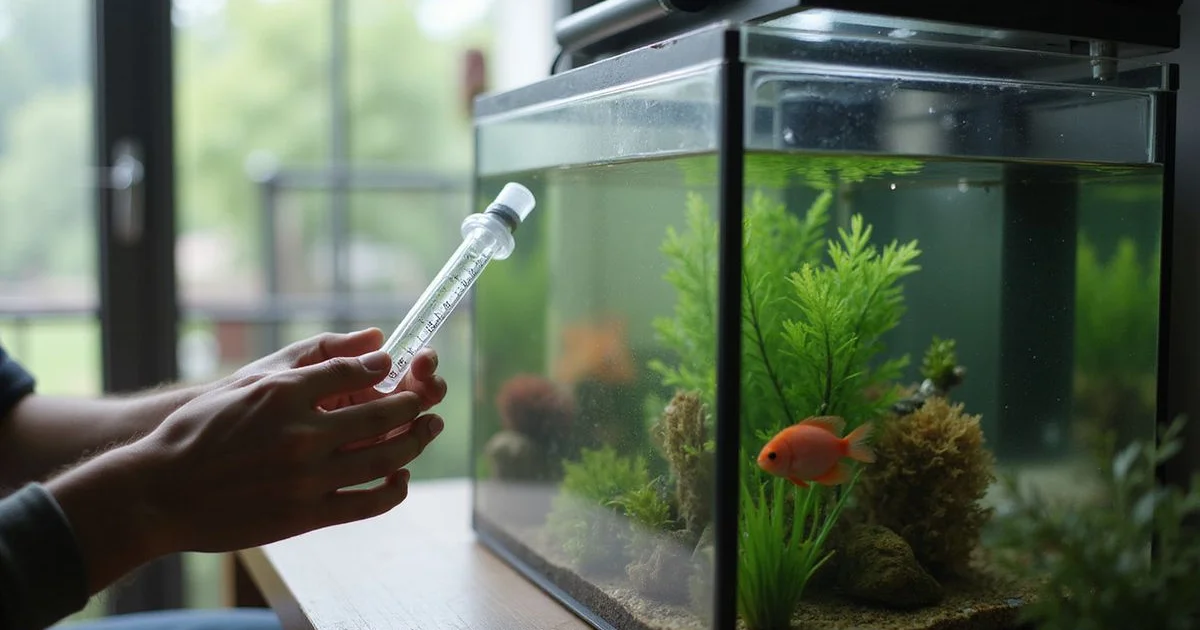
For a related deep dive, read our best beginner freshwater fish. We see too many local homeowners and business owners give up on aquariums because their first fish do not survive the opening month.
Setting up a vibrant display is much easier if you start with our parent guide on Freshwater Tropical Fish. Our team has helped thousands of US locals skip the heartache by simply understanding the hidden biological engine running behind the glass. You will save money and avoid frustration by letting the proper bacteria establish themselves before buying livestock.
Knowing how to cycle a freshwater aquarium is the most valuable skill you can learn. We are going to explain exactly how this works, look at the timeline, and share the exact methods professionals use to prepare a pristine freshwater system. This guide protects your investment from new tank syndrome right from day one.
What the nitrogen cycle is
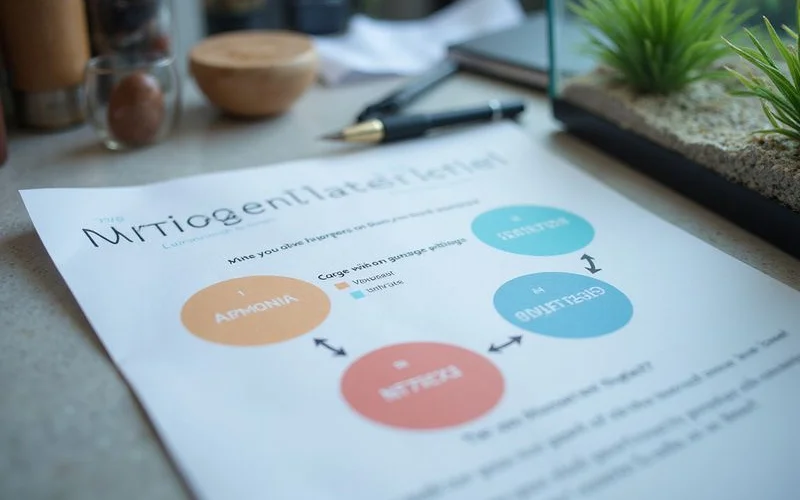
The nitrogen cycle aquarium process is the natural biological engine where specific bacteria convert highly toxic fish waste into safer compounds. Our professional service team considers this the most critical concept for any new tank owner to master.
Fish produce heavy waste that breaks down into ammonia, which burns gills even at low concentrations. A healthy tank relies on naturally occurring Nitrosomonas bacteria to consume that ammonia and turn it into nitrite. We track these bacterial shifts daily using liquid testing kits to ensure a safe environment.
Nitrite is also toxic, but soon a second group of bacteria, usually Nitrospira or Nitrobacter, arrives to convert it into a much safer compound called nitrate. A 2022 US water quality survey showed that unfiltered ammonia can reach lethal levels in a new setup within just 48 hours. Our technicians heavily rely on a three-stage breakdown to keep livestock healthy.
These three distinct phases require specific attention:
- Ammonia: Highly toxic waste from fish, decaying food, and plant matter.
- Nitrite: A dangerous byproduct created when the first bacteria consume ammonia.
- Nitrate: The final, safer compound that you remove through routine water changes.
Fishless cycling (ammonia source) vs fish-in cycling, pros/cons of each
Fishless cycling builds your biological filter using pure liquid ammonia before any animals enter the tank, while fish-in cycling uses a few hardy fish to generate the waste. We strongly recommend the fishless method for homeowners because it removes the risk of harming expensive livestock.
Adding products like Dr. Tim’s Aquatics Ammonium Chloride allows you to precisely control the environment. Our standard protocol uses four drops of this liquid ammonia per gallon to achieve an exact 2 ppm (parts per million) concentration.
Fish-in cycling requires constant, stressful daily water changes to prevent the fish from dying in their own waste. Emergency rescues are the only time professionals use the fish-in approach. We prefer letting the chemistry balance itself out before placing any living creature inside.
| Feature | Fishless Cycling | Fish-In Cycling |
|---|---|---|
| Animal Safety | Zero risk to fish | High stress for fish |
| Speed | Usually 2 to 4 weeks | Often takes 6 to 8 weeks |
| Maintenance | Low effort, mostly testing | Requires daily water changes |
Typical 4-6 week cycle timeline with what to test for at each stage
A standard new aquarium takes about four to six weeks to fully establish its bacterial colonies. We always equip new clients with a liquid testing kit, like the API Freshwater Master Test Kit, to ensure they understand how to cycle a freshwater aquarium correctly.
The chemical process happens in predictable stages that require your patience. Proper monitoring requires checking your water parameters every couple of days.
Weeks 1 and 2, The Ammonia Phase
Your ammonia levels will rise sharply right after you dose the tank. We look for the concentration to stay around 2 ppm during these first two weeks.
The water might become slightly cloudy as the first wave of Nitrosomonas bacteria begins to multiply. Adding about 8 drops from the API ammonia test bottles will give you a clear reading of your progress. Our team advises against doing any water changes right now, as you do not want to starve the growing colony.
Weeks 3 and 4, The Nitrite Phase
Ammonia readings will begin to drop toward zero as nitrite levels suddenly spike. We consider this the most dangerous phase for livestock, which is why patience is critical.
Nitrite prevents a fish’s blood from carrying oxygen, causing them to suffocate even in heavily aerated water. Fast-acting tests usually show nitrite peaking around week three before the Nitrospira bacteria catch up. Our technicians watch this phase closely to ensure the biological engine is maturing correctly.
Weeks 5 and 6, The Nitrate Finish
Both ammonia and nitrite will eventually fall flat to zero. We then start seeing measurable nitrate, signaling that the entire biological chain is functioning.
Nitrate is much less toxic and acts as fertilizer if you have live aquatic plants. Your final step before adding fish is a large water change to lower those initial nitrates. Our records show that systems given a full six weeks to mature experience almost no fish loss.
Signs your tank is fully cycled (0 ammonia, 0 nitrite, measurable nitrate)
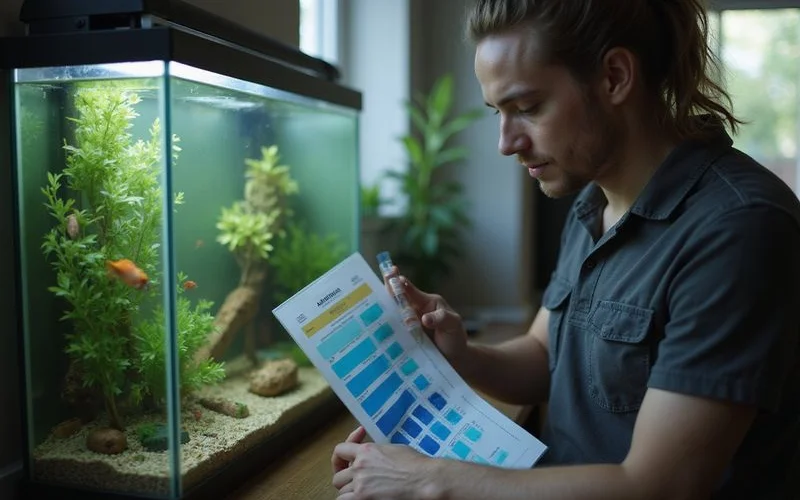
Your tank is ready for fish when a dose of 2 ppm ammonia is completely processed into nitrate within 24 hours. We verify this stability by checking that the testing vials show exactly 0 ppm for ammonia, 0 ppm for nitrite, and a measurable amount of nitrate.
The US Environmental Protection Agency caps safe drinking water nitrates at 10 ppm, but aquariums can safely handle up to 40 ppm for most fish. High nitrates simply require a routine water change schedule to keep them manageable. Our maintenance crews prefer to keep display tank nitrates under 20 ppm to prevent aggressive algae blooms.
A 50 percent water change is usually necessary right after the cycle finishes to bring those initial nitrates down into the safe zone. We recommend stocking your tank slowly over several weeks to let the bacteria population scale up with the new waste load.
- Verify ammonia drops from 2 ppm to 0 within 24 hours.
- Confirm nitrite remains strictly at 0.
- Perform a large water change to reduce built-up nitrates.
- Ensure the water temperature matches your planned livestock requirements.
Soft bridge to free in-store water testing once the tank is up
Keeping your water parameters stable is an ongoing job, and having professional testing can prevent disasters. Our Sarasota store at 2847 Bee Ridge Road provides comprehensive chemical analysis to help you protect your investment.
Marcus Chen opened Gulf Coast Aquatics in 2019 after 25 years in the hobby and years managing big-box aquarium departments. This facility was built for hobbyists who want real answers instead of high-pressure sales tactics. We quarantine every fish for two weeks, and label every saltwater species for reef compatibility.
Transparency is a core value here. Our policy is simple, if your water chemistry is off, we will tell you the truth before you buy livestock. A standard checkup covers multiple critical parameters to catch hidden problems.
- Ammonia, Nitrite, and Nitrate
- pH and Alkalinity
- Calcium and Magnesium
- Salinity (for marine setups)
First-time tank owners who have been told to cycle their tanks are exactly who this service is for. We encourage you to bring a water sample anytime for a complete evaluation. Results take about ten minutes, and our staff will explain the issues in plain language.
Practical next steps
The best thing you can do right now is gather your testing supplies and start your ammonia dosing. Our goal is for your new aquatic environment to thrive for years to come.
Taking action now ensures your future fish have a safe, clean home. We have outlined a few straightforward steps to get you moving.
- Test your water locally for free, see our free water testing page for details.
- Match livestock to your actual parameters instead of relying on internet forum guesses.
- Ask us before you buy, because we will tell you if something will not work in your tank.
Visit Gulf Coast Aquatics
Stopping by a dedicated local shop gives you access to commercial-grade advice and healthy livestock.
We are located at 2847 Bee Ridge Road, Sarasota, FL 34239, ready to help with your project. You can call the shop directly at (941) 555-0178 to speak with a technician.
Our doors are open Monday through Saturday from 10 AM to 6 PM, and Sunday from 12 PM to 5 PM. Mastering how to cycle a freshwater aquarium starts with a solid plan, so stop by this week to finalize your setup.
Frequently asked questions
How long does it take to cycle a freshwater tank? ▼
Fishless cycling: 4-6 weeks typically. Fish-in cycling is faster but stressful for the fish and requires daily water changes.
Do I have to cycle if I use bottled bacteria? ▼
Bottled bacteria (Seachem Stability, Fritz TurboStart) shortens cycling significantly but still requires confirmation testing — bring a sample in for free testing.
Can I add fish during cycling? ▼
Only if you commit to fish-in cycling with daily testing and small water changes. Fishless is gentler and our recommended approach.
Ready for the next step?
Browse our Freshwater Fish selection in store or ask us in person at Bee Ridge Road.
View Freshwater Fish