Freshwater Fish Compatibility: What Lives With What
Which freshwater fish can live together — temperament, pH/temp overlap, schooling needs, and classic incompatible pairings to avoid.
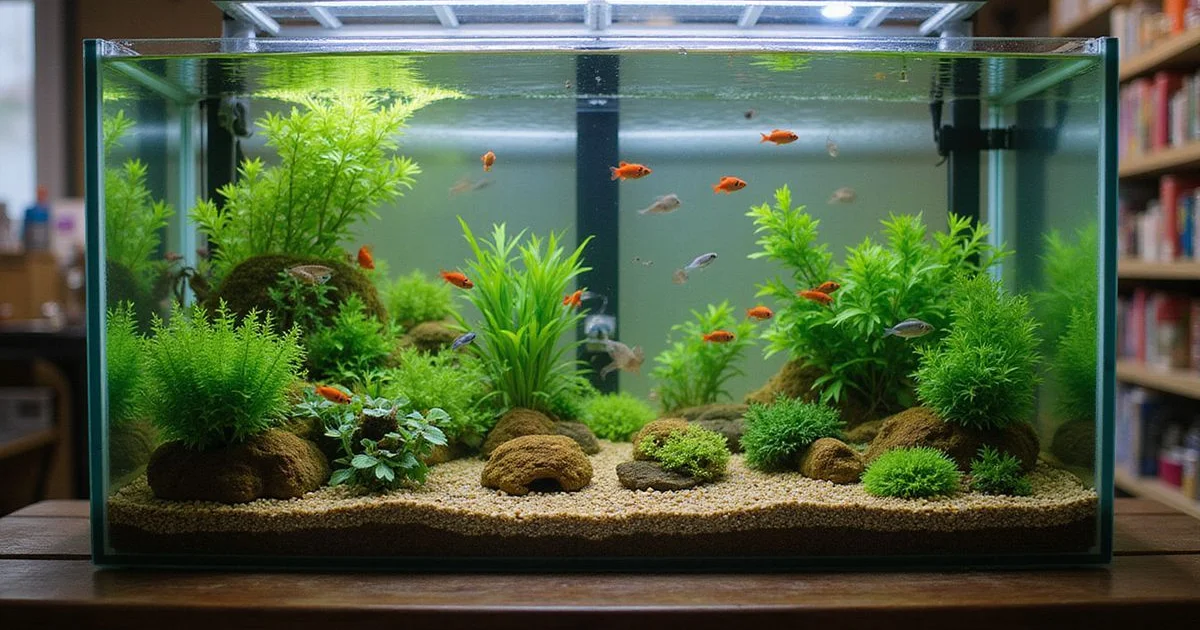
For a related deep dive, read our aquascaping a community tank. We see it all the time: an enthusiastic hobbyist buys a beautiful mix of species, only to discover a week later that half the tank is stressed or missing. This common mismatch happens because too many people build community tanks based on colors instead of a concrete freshwater fish compatibility framework.
Our primary goal is to solve this problem and reinforce our “ask us before you buy” approach to livestock sales. We know that forcing incompatible fish together is the fastest way to crash a system, as improper mixing causes severe stress and triggers fatal disease outbreaks.
Start with our parent guide on Freshwater Tropical Fish to review the baseline basics.
This guide provides the exact parameters you need to match your livestock perfectly. We will map out the specific rules for temperament, temperature, and schooling behaviors to help you plan your ideal community tank.
Temperament categories
Freshwater fish fall into three main temperament categories: peaceful, semi-aggressive, and aggressive. Finding community fish that live together peacefully requires matching their temperaments perfectly, as mixing passive species with aggressive predators usually results in the smaller fish being eaten.
Our team categorizes species strictly to prevent these completely avoidable disasters. Peaceful fish, like the 1-inch Green Neon Tetra, require entirely non-aggressive, similarly sized tank mates to survive.
They lack the physical defenses to share space with highly territorial species. We often see severe issues when homeowners try to add semi-aggressive fish into a purely peaceful tank.
Species like Tiger Barbs or Angelfish might look harmless when small, but they actively nip the fins of slower fish as they mature. Our general rule for any US aquarium setup is to keep your peaceful community fish completely separate from semi-aggressive fin-nippers.
Aggressive species, such as African Cichlids or Jack Dempseys, require a dedicated species-only tank. This dedicated space allows them to establish territories without terrorizing passive neighbors.
| Temperament | Species Examples | Best Tank Mates |
|---|---|---|
| Peaceful | Neon Tetras, Corydoras, Guppies | Other small, non-aggressive species. |
| Semi-Aggressive | Tiger Barbs, Angelfish, Gouramis | Fast-swimming fish or larger, durable species. |
| Aggressive | Oscars, Jack Dempseys, Convict Cichlids | Species-only tanks or highly specific large cichlid setups. |
pH and temperature overlap requirements (why discus and platies don’t mix)
Discus and platies cannot live together because they require completely opposite water conditions to survive. Discus need warm, soft, acidic water around 85°F, while platies thrive in cooler, hard, alkaline water near 75°F.
Our quarantine process highlights exactly why this environmental overlap matters. If you force a Platy into an 86°F discus tank, its metabolism skyrockets, which significantly shortens its lifespan.
Conversely, keeping a Discus in 72°F water with a pH of 8.0 will suppress its immune system and invite diseases. Current veterinary guidelines confirm that maintaining a stable temperature between 82°F and 86°F is the single most important factor for Discus health.
We strictly test water samples to prevent these incompatible pairings from ruining your investment. You must verify that every fish in your tank shares an overlapping comfort zone for both pH and temperature.
| Water Parameter | Discus Requirements | Platy Requirements |
|---|---|---|
| Temperature | 82°F to 86°F | 70°F to 77°F |
| pH Level | 6.0 to 7.0 (Slightly Acidic) | 7.0 to 8.0 (Alkaline) |
| Water Hardness | Soft (1-4 dGH) | Hard (10-28 dGH) |
Schooling vs solitary species, and minimum group sizes
Schooling fish require a minimum group of six to feel safe, while solitary species do best alone or as the single centerpiece of a tank. Keeping a schooling fish by itself causes severe stress and often leads to an early death.
Our store policy aligns with current veterinary consensus for US aquarium owners. Schooling species like Neon Tetras or Corydoras catfish rely on group numbers for basic security and confidence.
You will see a massive behavioral difference when keeping these fish in proper groups. While a bare minimum of six is acceptable, pushing that number to 10 or 12 creates a tighter, more cohesive shoal.
We highly recommend sizing up your tank to accommodate these larger, healthier groups. Solitary fish, such as male Betta fish, prefer to own their territory and will become highly aggressive if forced to share space with a similar species.
Recommended Minimum Group Sizes
- Corydoras Catfish: Start with a minimum of 6, but expanding the group to 10 or more encourages their natural bottom-foraging behavior.
- Neon Tetras: Keep at least 8 to 10 to prevent shy, hiding behavior and to witness their tight schooling patterns across the middle of the tank.
- Tiger Barbs: Buy groups of 6 or more to keep their fin-nipping aggression contained entirely within their own ranks.
- Solitary Centerpieces: Species like Bettas or Red Tailed Sharks should remain as single specimens in most standard community setups.
Classic incompatible pairings to avoid
Some of the most common incompatible aquarium fish pairings include Angelfish with Neon Tetras, Oscars with small community fish, and Bettas with fin-nipping barbs. These combinations almost always result in the smaller or slower fish being bullied or eaten outright.
Our staff actively stops these purchases at the register to save your tank from a predictable disaster. Angelfish are natural ambush predators, and as they grow, those tiny Neon Tetras become a very expensive snack.
Oscars present another massive compatibility issue due to their explosive growth rate. A juvenile Oscar can easily grow from 2 inches to a massive 10 to 12 inches within its first year, meaning it will quickly consume any small tank mates.
We also warn customers against mixing slow-moving Bettas with aggressive fin-nippers like Serpae Tetras. The fast-swimming tetras will shred the Betta’s long, flowing fins, leading to severe stress and bacterial infections.
Three Combinations That Will Ruin Your Tank
- Angelfish and Neon Tetras: Angelfish are cichlids that naturally prey on small, torpedo-shaped fish. Once the Angelfish reaches adult size, your school of Neons will disappear one by one.
- Oscars and Small Community Fish: Oscars grow up to 14 inches and possess massive mouths. Any fish that can physically fit inside an Oscar’s mouth will eventually become fish food.
- Bettas and Fin-Nippers: Tiger Barbs and certain Tetras are notorious for nipping. They will relentlessly attack a Betta’s elaborate fins until the fish is stripped bare and prone to infection.
‘Ask us before you buy’ CTA, we won’t sell incompatible species
Our strict policy is to verify your tank parameters before you purchase livestock, and we will politely decline a sale if the species are incompatible. This process ensures you do not waste money on fish that will not survive your current setup.
Gulf Coast Aquatics opened in 2019 at 2847 Bee Ridge Road in Sarasota, Florida. Marcus Chen founded the store after 25 years in the hobby to provide real answers rather than big-box sales pressure.
We quarantine every single freshwater fish for two full weeks before they ever hit the sales floor. This mandatory hold ensures that the peaceful, healthy fish you buy do not introduce parasites or pathogens into your established community setup.
Every saltwater species also gets clear reef-safe labeling. If you are here as a buyer planning a community tank and worried about mixing incompatible species, you are in the exact right place.
Free In-Store Water Testing
Bring a water sample into the store anytime for a comprehensive, free diagnostic test. Our team tests for ammonia, nitrite, nitrate, pH, alkalinity, calcium, magnesium, and marine salinity.
Your results take about ten minutes to process right at the counter. We will explain exactly what is driving your chemistry issues in plain language, helping you correct the environment before adding new fish.
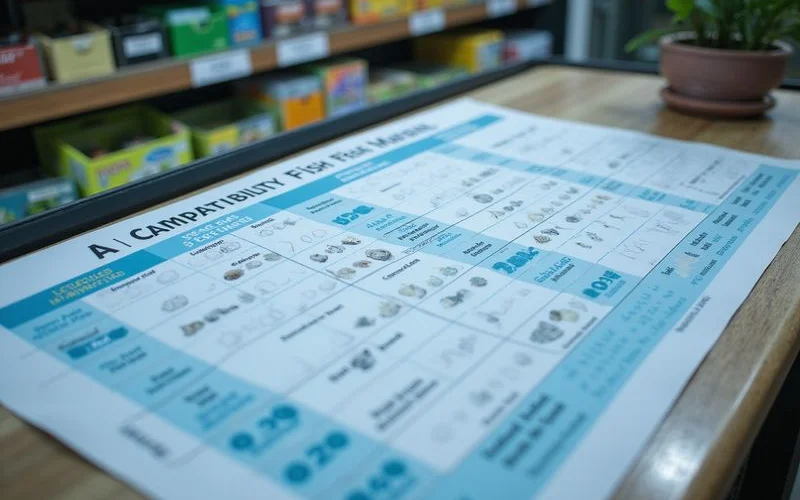
Practical next steps
Your next best step is to gather a fresh water sample and bring it straight to our testing counter. We need to verify your exact parameters before you make any final livestock decisions.
Here is the straightforward process for securing the right fish for your tank:
- Test your water at our counter for free, or visit our free water testing page for details.
- Match your new livestock to your actual, verified tank parameters rather than relying on forum guesses.
- Ask our experts before you finalize a purchase, so we can warn you if a specific pairing will fail in your tank.
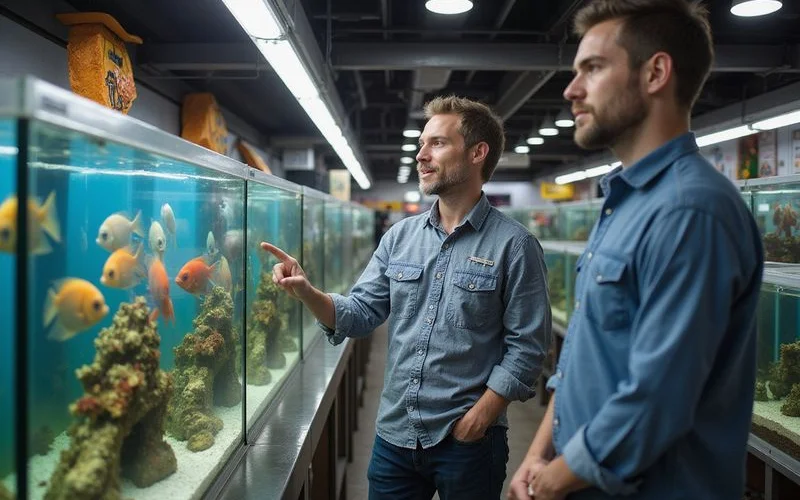
Visit Gulf Coast Aquatics
Our doors are open seven days a week to help you build a healthy, thriving community tank. The team is ready to discuss your specific aquarium goals in person and answer any questions you have about freshwater fish compatibility.
Address: 2847 Bee Ridge Road, Sarasota FL 34239 Phone: (941) 555-0178 Hours: Open Mon-Sat 10-6, Sun 12-5.
Frequently asked questions
Can I mix African cichlids with community fish? ▼
No — Africans need hard alkaline water and are aggressive. They belong in their own setup.
What's the easiest community combination? ▼
Neon tetras + corydoras + a single male betta in a heavily planted 20g long is a classic that works.
Will fish 'work out' aggression issues over time? ▼
Rarely — aggression usually escalates. Honest answer: rehome the aggressor before you lose fish.
Ready for the next step?
Browse our Freshwater Fish selection in store or ask us in person at Bee Ridge Road.
View Freshwater Fish