Inside Our 2-Week Marine Quarantine Protocol
How Gulf Coast Aquatics quarantines every saltwater fish — Copper Power, Prazipro, 14-day observation. Why our marine fish actually live.
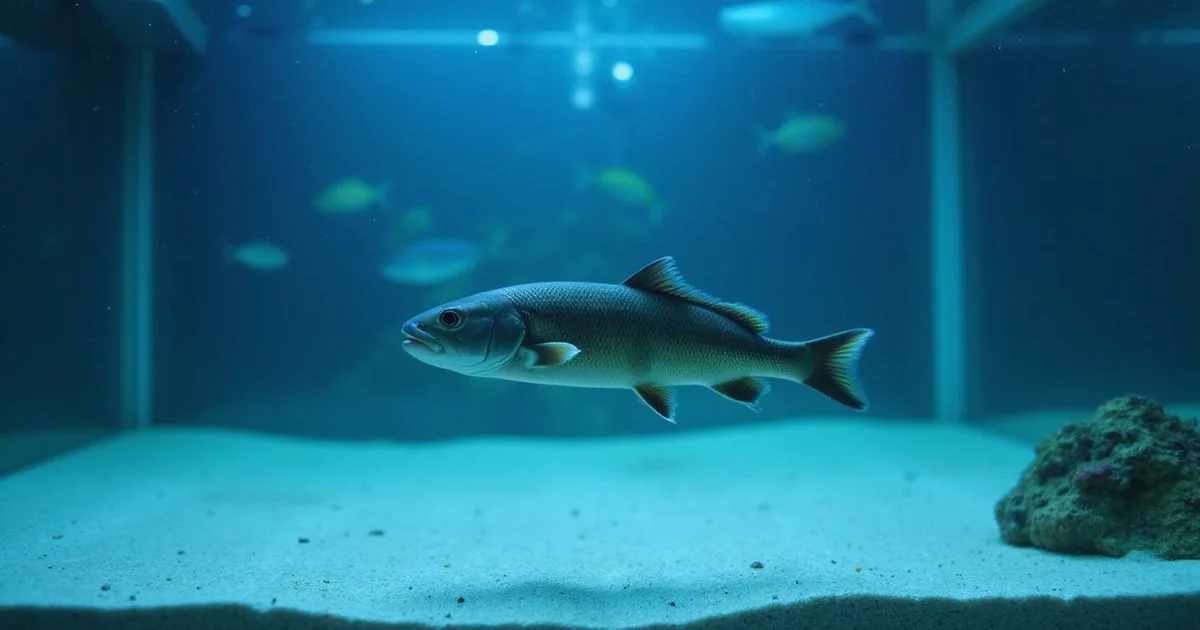
For a related deep dive, read our marine Ich, Velvet and Flukes guide. Goal: Establish trust around the strongest USP and justify livestock pricing vs big-box.
You know how frustrating it is to introduce a beautiful new tang to your display, only to watch a Velvet outbreak decimate the entire tank days later. Current industry data shows that nearly 90% of marine fish in the US trade are wild-caught.
These wild imports run a massive risk of carrying invisible parasites straight into your living room. We highly recommend reviewing our complete guide on Saltwater Fish to understand the baseline care these animals need.
We opened Gulf Coast Aquatics at 2847 Bee Ridge Road in Sarasota back in 2019 to offer a safer alternative for local hobbyists. Marcus Chen built this store after 25 years in the hobby and a long career managing big-box aquarium departments.
His goal was to provide real answers and conditioned livestock rather than high-pressure sales. Our team treats every quarantined marine fish sarasota hobbyists buy for two full weeks before it ever hits the sales floor.
Every saltwater species gets clear, reef-safe labeling so you know exactly what you are buying.
This strict process justifies the premium price tag on our livestock compared to the quick-turnaround chain stores. The initial cost saves you from the devastating expense of replacing an entire wiped-out collection. We will walk through the specific medications we use, specifically the copper power prazipro combination, the science behind the timeline, and how this protects your investment.
Step-by-step protocol
Our 14-day protocol moves fish from an initial observation tank through a rigorous treatment of 2.5 ppm Copper Power and 2.5 mg/L Praziquantel before final clearance. This ensures every fish is actively eating and free of common parasites.
We start by placing new arrivals into a dedicated, sterile observation tank. The first 48 hours allow the fish to recover from shipping stress without the immediate shock of harsh medications. Our staff monitors breathing rates and swimming patterns to catch any immediate red flags.
Proactive medication begins on day three. We gradually raise the copper level in the water using Copper Power, aiming for a highly specific therapeutic concentration of 2.5 parts per million (ppm). This specific chelated copper formula is much safer for delicate marine species than older ionic copper treatments. The steady 2.5 ppm level safely eradicates external parasites over the next several days.
| Medication | Active Ingredient | Target Level | Primary Target |
|---|---|---|---|
| Copper Power | Chelated Copper | 2.5 ppm | External Parasites (Ich, Velvet) |
| Prazipro | Praziquantel | 2.5 mg/L | Flukes, Tapeworms, Flatworms |
Adding Prazipro and final clearance
We also dose the system with Prazipro to target internal and external worms. The active ingredient is praziquantel, which we maintain at 2.5 mg/L to wipe out stubborn flukes and tapeworms. Medication requires re-dosing every three to five days because beneficial bacteria in the filter quickly break it down.
Daily monitoring continues throughout the entire two-week window. Our staff performs frequent water testing to ensure the copper levels never dip below the 2.0 ppm threshold, which would allow parasites to survive. Fish receive a final 14-day clearance only after they show clean skin, clear eyes, and aggressive feeding behavior.
What diseases the protocol prevents
Our saltwater fish quarantine protocol directly prevents three of the most devastating marine aquarium killers: Marine Ich, Marine Velvet, and parasitic Flukes. These pathogens routinely wipe out unquarantined home aquariums.
We see Marine Velvet (Amyloodinium ocellatum) as the absolute highest threat to a new saltwater tank. This aggressive dinoflagellate can suffocate and kill prized fish in less than 24 hours after physical symptoms appear. Infected fish often look like they were dusted in fine powdered sugar. Our 2.5 ppm copper treatment completely interrupts the Velvet life cycle before the fish ever leaves our store.
Marine Ich (Cryptocaryon irritans) operates a bit slower but is incredibly common in wild-caught specimens. You can identify Ich by the presence of larger, distinct white spots that resemble grains of salt. The parasite burrows into the skin of the fish, making it highly contagious in a closed home aquarium.
Flukes are flatworms (Trematodes) that latch onto the gills and bodies of fish. We use the Prazipro baths specifically to force these invisible hitchhikers to drop off the host. Common signs of fluke infections include:
- Heavy, labored breathing
- Scratching or flashing against rocks
- Cloudy or opaque eyes
- Frayed fins or pale coloration
Feeding regimen during quarantine, getting fish eating before they hit the floor
We feed our quarantined fish a rotating diet of frozen mysis shrimp, live foods, and high-quality pellets to break them out of starvation mode. A fish that refuses to eat in the store will almost certainly starve in your home tank.
Wild-caught fish often experience severe trauma during the collection and shipping process. This stress completely shuts down their natural feeding responses. Our team spends the first few days of quarantine strictly focused on enticing a feeding response using highly attractive frozen foods.
We slowly transition them onto standard prepared foods once they regain their appetite. This step is critical because many hobbyists rely on automated pellet feeders or dry flakes for daily maintenance. Our goal is to ensure the fish recognizes standard aquarium foods as a legitimate food source.
You should never buy a marine fish without asking the store staff to feed it right in front of you.
We gladly provide feeding demonstrations for any quarantined fish in our Sarasota showroom. A healthy feeding response is the strongest indicator that the animal has successfully completed its medication cycle and is ready for your display.
How to identify ‘QT’d’ fish in our store (tank labels, dates)
Every fully conditioned fish in our Bee Ridge Road store features a bright green sticker right on the glass. We use these labels to track the exact timeline of their medication and observation periods.
Our tank labels contain three vital pieces of information for the buyer:
- The exact date the 14-day clearance ended
- The specific species name and origin
- A clear “Reef-Safe” or “Fish-Only” compatibility rating
This transparent labeling system completely removes the guesswork from your buying experience. You never have to wonder how long a specific clownfish or tang has been sitting in our system. Our staff updates these tags daily as new batches graduate from the backroom holding tanks.
What it doesn’t replace
Our retail quarantine protocol heavily reduces your risk, but a dedicated home quarantine tank still adds a necessary layer of safety. The absolute best practice is to isolate new fish at home for at least 14 days before introducing them to your main display.
The bagging process, the car ride home, and acclimating to new water parameters all create massive stress for the fish. This severe stress temporarily depresses their immune system. A fish that appeared perfectly healthy in our store can suddenly become susceptible to bacterial infections in your tank.
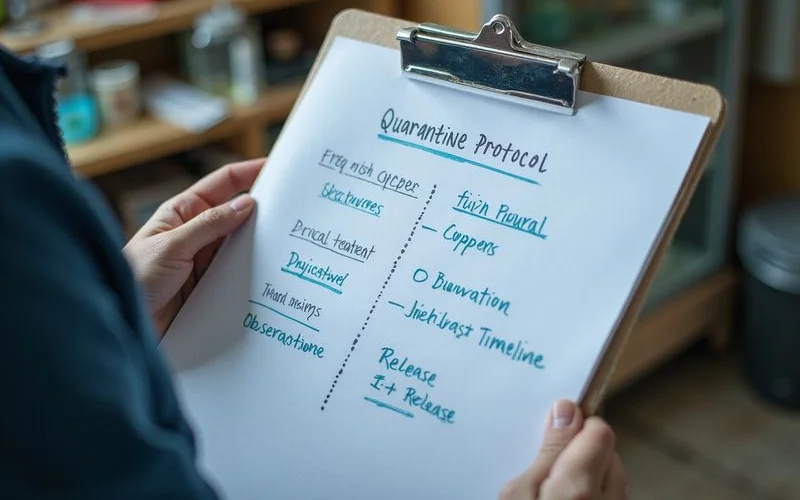
A quiet observation tank at home protects your established fish from stress-induced bacterial outbreaks.
Your home quarantine setup provides a quiet, competitive-free zone for the fish to recover. We advise using a simple 10-gallon or 20-gallon bare-bottom tank with a basic sponge filter. This secondary isolation ensures the new arrival learns to eat your specific brand of food without fighting established tank mates for every bite.
Practical next steps
We want your new livestock to thrive for years to come. The most practical step you can take today is to verify your home water chemistry matches the needs of the fish you want to buy.
- Test your water at our shop. We offer comprehensive, fast analysis right in the store, so please see our free water testing page for details on what we check.
- Match livestock to your actual parameters instead of relying on forum guesses.
- Ask us before you buy a new fish. We will tell you directly if a specific angelfish or tang will not work in your current setup.
Visit Gulf Coast Aquatics
We invite you to see our healthy, actively eating marine livestock in person. The Sarasota showroom is fully stocked with quarantined fish that are ready for your home aquarium.
Stop by our store at 2847 Bee Ridge Road, Sarasota FL 34239 during regular business hours. You can call us directly at (941) 555-0178 to check the availability of specific species. Our doors are open Monday through Saturday from 10 AM to 6 PM, and Sunday from 12 PM to 5 PM.
We encourage you to bring a water sample on your next visit. A knowledgeable staff member will run a complete diagnostic test and help you select the perfect fish for your specific tank conditions.
Frequently asked questions
Why don't more shops quarantine? ▼
It costs money (tanks, copper, time) and slows turnover. We made that trade-off because the alternative is selling sick fish.
Should I still quarantine at home if I bought from you? ▼
Yes — it adds another safety layer, especially for established reef tanks where one disease is catastrophic.
Are quarantined fish more expensive? ▼
Slightly — but they actually live, so the per-surviving-fish cost is way lower than big-box.
Ready for the next step?
Browse our Saltwater Fish selection in store or ask us in person at Bee Ridge Road.
View Saltwater Fish