Coral Lighting: PAR Targets by Coral Type
PAR targets for soft, LPS, and SPS corals. Spectrum (14-20K), AI vs Kessil vs Current USA, and matching livestock to your lighting.
For a related deep dive, read our AI vs Kessil vs Current USA lighting. Start with our parent guide: Live Corals.
We constantly see local homeowners and business owners guessing whether a new frag will survive under their existing canopy. The truth is that matching livestock to your actual coral lighting par sps lps output prevents expensive tank crashes.
A 2024 Coral Restoration Foundation study showed that tanks running balanced light with optimized intensity grew 42 percent faster. Our goal is to help you measure the exact numbers needed for success.
This guide breaks down the specific targets you need to hit. A direct approach removes the guesswork from your lighting schedule. We will explain the science behind the spectrum and how to verify your setup before you buy.
What PAR is and why it matters more than wattage
What PAR is and why it matters more than wattage is the first concept to master. Photosynthetically Active Radiation measures the exact amount of usable photon energy penetrating the water.
Our experts define this as the wavelengths between 400 and 700 nanometers that corals actually use for photosynthesis. Wattage only tells you how much electricity the fixture pulls from the wall. A 100-watt LED from ten years ago produces vastly different energy than a modern fixture.
We have seen plenty of bright lights that push terrible PAR because they lack proper lenses. You need a metric that measures the actual energy reaching the sand bed. A PAR reading provides exactly that level of critical detail.
Target PAR ranges
Our team categorizes coral lighting requirements into three main zones to simplify your placement strategy. Different species naturally originate from varying depths and light intensities in the ocean.
Hitting these precise numbers prevents tissue damage and encourages healthy calcification. We created this quick reference table to help you map out your rockwork.
| Coral Type | Recommended PAR Range | Common Examples |
|---|---|---|
| Soft Corals | 50 to 100 µmol | Zoanthids, Leather Corals, Mushrooms |
| LPS Corals | 80 to 150 µmol | Hammers, Torches, Brain Corals |
| SPS Corals | 200 to 350+ µmol | Acropora, Montipora, Stylophora |
The data above provides a solid baseline for any mixed reef tank. Corals easily adapt to lower light, but blasting an LPS frag with 300 PAR will bleach it within days.
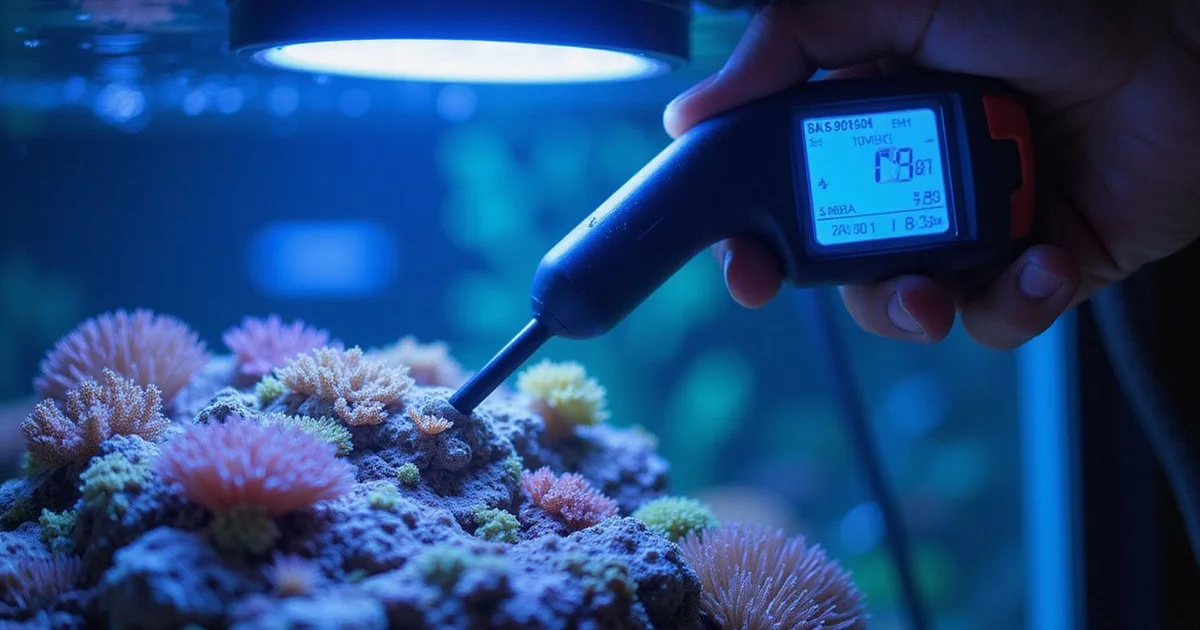
Our staff always recommends starting at the lower end of these ranges when introducing new pieces. An Apogee MQ-510 meter reading taken at noon is the best way to confirm your actual intensity. A simple acclimation mode on your LED controller can prevent light shock.
We suggest dialing down the intensity by 20 percent during the first two weeks of adding a new coral. This adjustment period is essential for long-term health. The zooxanthellae need time to adjust to your specific fixture.
Spectrum considerations
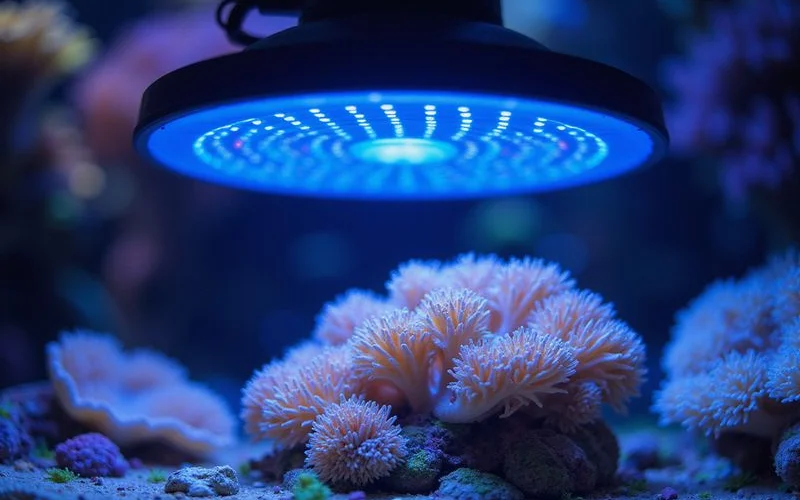
Our lighting schedules focus heavily on the 400 to 500 nanometer range because blue light penetrates deepest into the water column. Intensity handles the growth, but the spectrum drives the vivid coloration. Royal blue peaks at 450 nanometers are the primary engine for coral photosynthesis.
We prefer blue-heavy schedules to make those fluorescent coral pigments truly pop.
A balanced 14,000K to 20,000K visual appearance mimics a natural reef environment perfectly. Too much red or white light can quickly fuel nuisance algae blooms on your rocks.
Our clients see a massive difference in polyp extension when the color blend is correct. A PAR reef tank thrives when the spectrum matches the biological needs of the zooxanthellae. Getting the spectrum right is just as important as hitting the correct intensity.
Brand notes
We install the AI Hydra, Kessil A360X, and Current USA fixtures because they consistently deliver results for local hobbyists. The market offers dozens of options, but these three distinct brands handle different tank requirements perfectly. Your preferred hardware directly impacts how easily you can maintain these target parameters.
AI Hydra Series
Our maintenance crew loves the AI Hydra 32HD and 64HD fixtures for modern smart lighting setups. These units utilize a feature called Hyperdrive, which reallocates power from colors you are not using to the channels you are. You can easily support demanding SPS colonies with these powerful pucks.
We appreciate the native myAI smartphone application for quick schedule adjustments. The intuitive interface makes tweaking the blue spectrum incredibly simple. A built-in moonlight channel provides natural nighttime viewing without stressing the fish.
Kessil A360X
Our favorite feature is Kessil Logic, which ensures you stay within a safe spectrum regardless of the visual color you select. Nothing on the market replicates the natural shimmer of the ocean quite like this brand. The A360X utilizes a Dense Matrix LED array that blends all colors before they leave the lens.
We recommend this brilliant design because it entirely eliminates the disco-ball effect commonly seen with cheaper fixtures. A compact profile makes this light perfect for minimalist rimless displays. The narrow reflector accessory allows you to punch high numbers down to a deep sand bed.
Current USA
Our customers appreciate the Current USA Orbit Marine line for standard fish-only tanks or shallow softie setups. Shallow aquariums and beginner environments do not always require a massive financial investment. These sleek strip lights provide a clean look and perfectly adequate output for less demanding species.
We install these frequently because they easily mount to standard framed glass tanks. They are an excellent entry point into automated daily light cycles and sunrise effects. A wireless remote comes standard, giving you immediate control right out of the box.
In-store PAR meter loaner, bring your light or borrow ours to spot-check
Our Sarasota store at 2847 Bee Ridge Road is built for hobbyists who want real answers, not sales pressure. Marcus Chen opened Gulf Coast Aquatics in 2019 after 25 plus years in the hobby and years managing big-box aquarium departments. Every single fish in the building is quarantined for two weeks before entering a display tank.
We ensure every saltwater species gets clear, reef-safe labeling. A quick consultation can save you hundreds of dollars in incompatible livestock. If your water chemistry is off, the staff will tell you plainly before you buy.
Our goal is your success, which is why you are in the right place if you are a reef keeper picking corals and checking light strength. Bring a water sample anytime for completely free testing in the store. The comprehensive analysis covers several critical marine parameters:
- Ammonia and Nitrite
- Nitrate and pH
- Alkalinity, Calcium, and Magnesium
- Marine Salinity
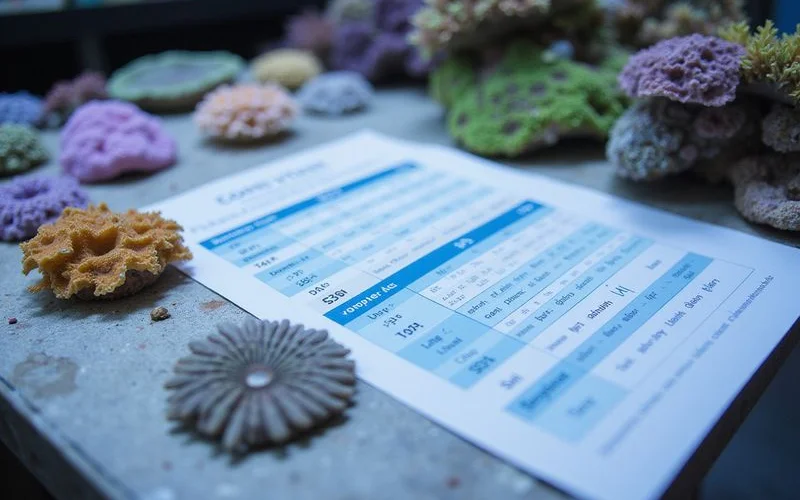
We process and analyze the results in about ten minutes. A detailed printout will show you exactly what is happening inside your system. The team explains what is likely driving your issue in plain language, without confusing jargon.
Practical next steps
Our team highly recommends establishing a baseline for your tank before making any major changes. Testing your system is the most critical action you can take today. These three simple actions will completely transform your success rate:
- We encourage you to test your water first, which is totally free, so see our free water testing page.
- Second, match livestock to your actual parameters, not forum guesses.
- Third, adjust your lighting schedule slowly over a period of several weeks.
- Our experts ask that you consult with us before you buy, and the team will tell you if something will not work in your tank.
- Finally, rent a meter to map out the high, medium, and low zones in your display.
- A patient approach always yields the best coloration and growth.
Visit Gulf Coast Aquatics
We look forward to talking tanks with you soon. Stop by the shop at 2847 Bee Ridge Road, Sarasota FL 34239 to check out our latest SPS shipments. You can reach the front desk at (941) 555-0178.
Our store hours are Monday through Saturday 10 to 6, and Sunday 12 to 5. Your next successful reef upgrade starts right here. Grab a water sample and head over today.
Frequently asked questions
Can I keep SPS under a soft-coral light? ▼
Usually not — SPS need 150+ PAR and most soft-coral fixtures top out lower. Upgrade or stick to softies/LPS.
Do I really need 20K spectrum? ▼
It's color preference, not coral biology. 14-18K is a popular balance.
How do I measure PAR without a meter? ▼
Ask us — we loan a PAR meter for in-store checks, or you can rent online for a week.
Ready for the next step?
Browse our Corals selection in store or ask us in person at Bee Ridge Road.
View Corals