SPS vs LPS vs Soft Corals: Picking Your Reef Style
SPS vs LPS vs soft corals — difficulty, lighting/flow needs, growth rates, and beginner-friendly species in each category.
For a related deep dive, read our coral lighting PAR guide. mdx Start with our parent guide: Live Corals.
Goal: Help keepers pick the coral category that fits experience and equipment without buying twice.
Our team hears the same question every week from hobbyists staring at our display tanks. They want to know which coral type is right for their current setup and skill level.
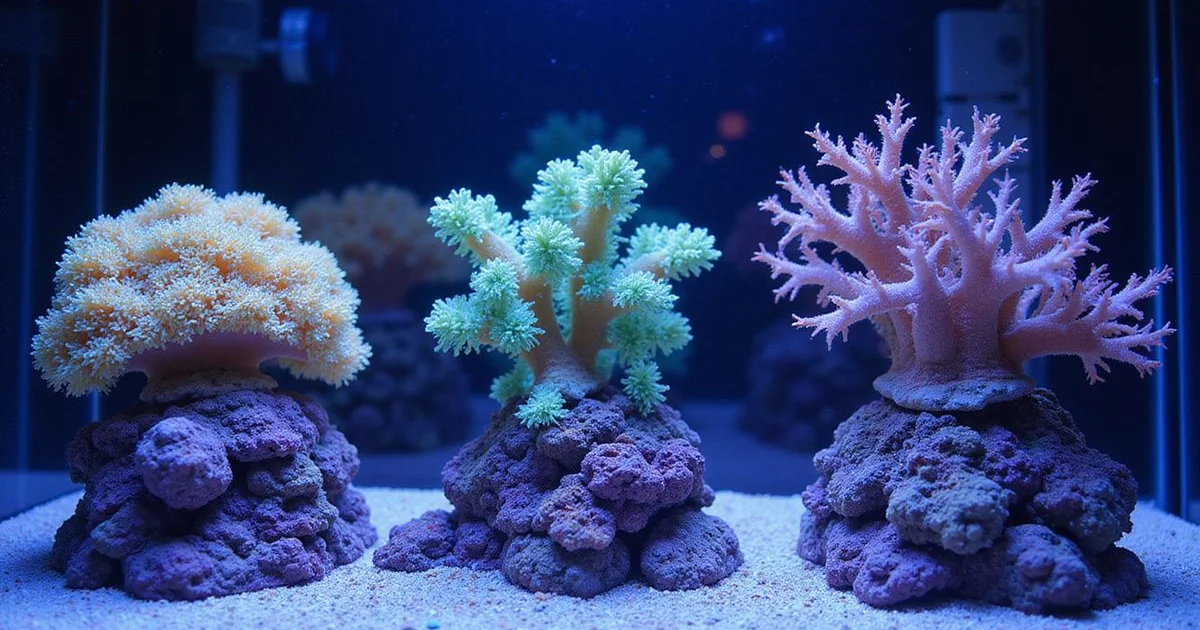
We created this breakdown of sps vs lps vs soft corals to help you choose wisely.
Matching the right livestock to your tank’s actual maturity will save you significant money and frustration. Let’s look at the data, what it actually means for daily maintenance, and how to make a smart first purchase.
Difficulty progression
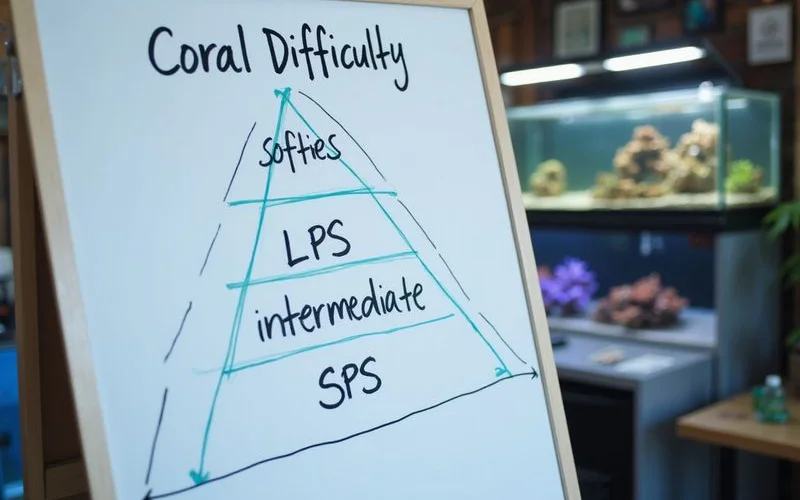
Soft corals are the undisputed starting point for any new reef. These species lack a rigid calcium carbonate skeleton, meaning they do not aggressively consume calcium and alkalinity from the water column. You can get away with minor parameter swings that would easily wipe out more sensitive additions.
Our typical recommendation for the next step up is the LPS, or Large Polyp Stony, category. These corals build hard skeletons but feature large, fleshy polyps that are very forgiving. You will need to start testing and dosing to keep your calcium levels stable around 400 to 450 ppm.
SPS, or Small Polyp Stony corals, sit at the very top of the difficulty pyramid. These fast-calcifying species require pristine water conditions, with nitrates kept strictly under 5 ppm. We only suggest adding SPS like Acropora once your tank has matured for at least eight to twelve months.
| Category | Difficulty | Skeleton Type | Water Stability Need |
|---|---|---|---|
| Soft Corals | Beginner | Fleshy (No Skeleton) | Very Forgiving |
| LPS Corals | Intermediate | Hard Base, Fleshy Body | Requires Dosing |
| SPS Corals | Expert | Rigid & Calcified | Needs Pristine Water |
Lighting and flow demands per category
Water movement and light intensity are the two biggest factors in long-term success. Soft corals thrive in lower light, typically preferring a Photosynthetically Active Radiation (PAR) range of 50 to 150. A gentle, indirect flow pattern is perfect to keep their soft tissues swaying without being blasted.
LPS corals need a moderate boost in both areas to support their fleshy heads. You should target 150 to 250 PAR, placing them in the middle or bottom of the tank depending on your fixture. They prefer a sweeping, alternating current to prevent detritus from settling on their sensitive tissue.
Our SPS tanks run on entirely different specifications. Recent 2026 PAR testing on modern LED fixtures confirms these demanding corals require heavy lighting in the 250 to 400+ PAR range. We also dial up the flow dramatically, aiming for a turnover rate of 40 to 50 times the tank volume per hour. This extreme water movement brings nutrients to their tiny polyps and strips away metabolic waste.
Here are the target PAR ranges:
- Soft Corals: 50 to 150 PAR
- LPS Corals: 150 to 250 PAR
- SPS Corals: 250 to 400+ PAR
Growth rates, softies grow fast, SPS slower but more dramatic
New hobbyists often expect to see massive growth overnight, but calcification takes time. Soft corals grow by reproducing their polyps and spreading across the rockwork. Many species, like Zoanthids, can easily cover an entire frag plug in just a few weeks under the right conditions.
LPS corals grow by splitting or sprouting entirely new heads from their base. A healthy Euphyllia might generate two to three new heads over a six-month period. You have to feed them meaty foods like mysis shrimp directly to speed up this process.
SPS corals grow much slower because they are actively building a dense calcium structure. A fast-growing Montipora might encrust a quarter-inch per month, while branching Acropora will slowly push out new tips. Our team highly recommends taking monthly photos to track this subtle, incremental progress.
Pro Tip from the Shop: Watch out for fast-growing soft corals like Green Star Polyps. They will aggressively encrust over your main rockscape if you do not isolate them on a separate “island” in the sand bed.
Beginner-friendly species in each
When looking at sps vs lps vs soft corals, finding the right starter pieces will give you a massive boost in confidence. We always steer new keepers toward bulletproof softies like Green Star Polyps (GSP) and Leather Corals. These species handle beginner mistakes well and provide immediate, satisfying movement in the water.
LPS lovers should start with the Euphyllia family, specifically the Hammer or Torch coral. These stunning pieces offer bright, fluorescent colors and thick, swaying tentacles. Our shop constantly stocks these because they are visually dramatic but only require basic water chemistry maintenance.
SPS options for beginners are limited, but the Montipora capricornis is a fantastic exception. This plating coral forms beautiful, swirling shelves and is much more forgiving of slight nutrient swings than branching SPS. It is the perfect test subject before you invest in expensive Acropora frags.
Let’s break these down into a quick reference list:
- Best Soft Corals: Green Star Polyps, Toadstool Leathers, and Mushroom Corals.
- Best LPS Corals: Hammer Corals, Duncan Corals, and Acans (Acanthastrea).
- Best SPS Corals: Plating Montipora and Birdsnest (Seriatopora).
What we recommend for first-time reefers and our in-store frag selection by category
Making that first livestock purchase can feel stressful. Our team at the Sarasota store, located at 2847 Bee Ridge Road, is built to give you real answers without any sales pressure.
Marcus Chen opened Gulf Coast Aquatics in 2019 to bring his 25 years of hobby experience directly to the local community. We quarantine every single fish for two weeks and clearly label every species as reef-safe or not. That strict process ensures you never introduce pests or diseases into your display.
If your water chemistry is off, we will tell you straight up before you buy any livestock. You are in the right place if you are a reef-curious or intermediate keeper picking which coral category fits their experience. Bring a water sample in anytime for our complete free testing service.
We check ammonia, nitrite, nitrate, pH, alkalinity, calcium, magnesium, and salinity for marine setups. Your results take about ten minutes to process. Our staff will then explain exactly what is driving your issue using plain, easy-to-understand language. Finding the root cause is the key to a thriving tank.
Practical next steps
Success in this hobby comes down to patience and preparation. Your first move should always be verifying your actual tank parameters.
- Test your water. This is completely free in store, so check out our free water testing page for details.
- Match your livestock choices to your verified parameters, not random forum guesses.
- Ask the shop staff before you buy. We will gladly tell you if a specific piece will not work in your current setup.
Visit Gulf Coast Aquatics
Ready to pick out your first beginner reef corals? Our team keeps the frag tanks fully stocked and ready to go. The shop is located at 2847 Bee Ridge Road in Sarasota, FL 34239.
You can reach us directly at (941) 555-0178 to check our current inventory. We are open Monday through Saturday from 10 AM to 6 PM, and Sunday from 12 PM to 5 PM. Deciding between sps vs lps vs soft corals is much easier when you see them in person.
Frequently asked questions
Can I mix all three coral types? ▼
Yes — mixed reefs work with careful placement (softies low/back, SPS top/light).
What's the easiest SPS? ▼
Montipora cap and digitata are forgiving SPS starting points.
Are zoas SPS or LPS? ▼
Neither — they're soft corals (specifically zoanthids), beginner-friendly and very colorful.
Ready for the next step?
Browse our Corals selection in store or ask us in person at Bee Ridge Road.
View Corals