Why Are My Freshwater Fish Dying?
Top 6 causes of freshwater fish deaths — ammonia, uncycled tank, chlorine, temperature, overstocking, incompatibility. Free Sarasota water testing.
For a related deep dive, read our how to cycle a freshwater aquarium. We see this scenario play out almost every day at the shop. A beautiful new aquarium setup quickly turns into a frustrating, costly experience when livestock begins to decline.
The cause is rarely a mystery once the water chemistry is analyzed. Our team wrote this guide to answer the most urgent question hobbyists ask: why are my freshwater fish dying?
Start by reviewing the basics in the parent guide on Freshwater Tropical Fish. Let’s look at the data, what it actually tells us, and explore a few practical ways to respond.
Why are my freshwater fish dying? Top causes ranked by frequency
We find that the most frequent cause of new tank fish death is a severe ammonia spike caused by an uncycled aquarium. Other major culprits include chlorinated tap water, sudden temperature swings, overcrowding, and incompatible tank mates.
The U.S. Environmental Protection Agency reports that over 20% of Americans use tap water treated with chloramines, which do not evaporate like regular chlorine.
Our staff constantly warns customers that failing to treat this municipal water will rapidly poison an entire tank. Ammonia poisoning fish incidents are incredibly lethal, as aquatic life sustains permanent gill damage at concentrations as low as 0.25 parts per million (ppm).
An uncycled tank simply lacks the beneficial bacteria required to process this waste. We categorize these environmental hazards into six primary threats.
Addressing them quickly will save your remaining livestock. The following table highlights the critical danger thresholds for the most common issues.
| Primary Cause | Critical Danger Threshold | Common Source |
|---|---|---|
| Ammonia Spike | Levels above 0.25 ppm | Overfeeding or uncycled tank |
| Chloramines | Any detectable amount | Untreated municipal tap water |
| Temperature Swing | Fluctuations over 2 degrees | Broken heaters or drafts |
The Six Most Common Triggers
We strongly recommend reviewing these top six triggers before adding any new fish. Each factor can devastate a freshwater ecosystem if left unaddressed. The nitrogen cycle typically takes four to six weeks to fully establish.
- Ammonia spikes: Waste builds up rapidly without proper filtration.
- Uncycled tanks: Lacks the established biology to process harmful toxins.
- Chlorinated water: Chloramine treatments in tap water will not evaporate naturally.
- Temperature swings: Fluctuations of just two degrees can induce severe shock.
- Overstocking: Adding too many specimens at once overwhelms the system.
- Incompatibility: Aggressive species will relentlessly harass peaceful tank mates.
How to diagnose each from fish behavior (gasping, flashing, hiding, color loss)
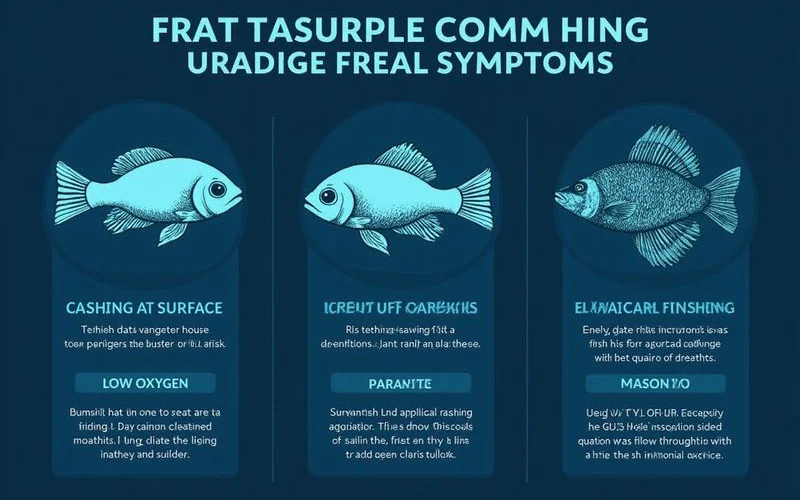
We rely on visual behavioral cues to diagnose water quality issues before even testing the chemistry. Gasping at the surface strongly indicates a lack of oxygen, often driven by high ammonia levels burning the gills.
Fish suffering from this specific chemical burn will struggle to breathe and appear highly lethargic.
Our experience shows that flashing, which involves darting and scratching against gravel, points directly to parasites or severe skin irritation from chlorine. Hiding in corners usually signals stress from incompatible, aggressive tank mates.
Interpreting Physical Symptoms
A sudden loss of vivid coloration is a universal stress response indicating poor overall water parameters. We always suggest checking the aquarium thermometer first when fish stop eating entirely.
Even a small drop in heat will drastically slow down their metabolism. A quick visual assessment gives you the baseline facts needed to take corrective action.
What to do in the next hour (water change, dechlorinator, isolate aggressors)
We strongly advise executing a 50% water change immediately if you suspect a toxic spike. Removing half the volume instantly dilutes the deadly compounds by 50 percent.
This rapid dilution provides your livestock with immediate relief while you troubleshoot the root cause. Our go-to emergency solution involves treating the fresh water with a specific conditioner like Seachem Prime.
This product temporarily binds ammonia and nitrite into a non-toxic state for 24 to 48 hours.
- Perform a 50% water change matching the tank temperature.
- Dose a binding dechlorinator like Seachem Prime.
- Isolate aggressive fish using a breeder net.
- Stop feeding for 48 hours to reduce waste output.
The bound toxins are then safely processed by your biological filter once it catches up. We also recommend physically separating any fish that exhibit aggressive behavior.
Isolating a bully in a breeder net prevents further physical trauma to weakened tank mates. Taking immediate steps within the first sixty minutes dramatically increases the survival rate of the remaining aquatic life.
Why testing the water is the only way to know, and how our free in-store test works
We cannot emphasize enough that guessing water parameters based solely on visual symptoms is a dangerous gamble. Clear water does not mean safe water, as deadly ammonia and nitrites remain completely invisible.
An API Freshwater Master Test Kit provides precise, verifiable parts-per-million readings for these hazards. Our Sarasota store at 2847 Bee Ridge Road is built for hobbyists who want real answers instead of sales pressure.
Marcus Chen opened Gulf Coast Aquatics in 2019 after 25 years in the hobby to provide this exact level of support.
Professional In-Store Analysis
Bring a water sample anytime for free testing covering ammonia, nitrite, nitrate, pH, and alkalinity. We take about ten minutes to process the results and explain what is likely driving your issue in plain language.
Every fish here is quarantined for two weeks, and every saltwater species receives accurate reef-safe labeling. If your water chemistry is off, you will know exactly why before purchasing any new livestock.
When to bring the dead fish in for visual diagnosis
We often request that customers bring in deceased fish for a close physical inspection. A visual examination reveals hidden clues like fungal infections, physical trauma, or parasitic cysts.
Place the specimen in a sealed plastic bag with a damp paper towel and keep it cool during transport. Our experts will look for specific markers like ammonia burns on the gills or the white spots indicative of Ich.
The Ichthyophthirius multifiliis parasite is notorious for wiping out entire tanks in a matter of days.
- Place the specimen in a sealed zip-top bag.
- Keep the bag cool but do not freeze it.
- Bring a separate water sample from the tank.
Identifying these exact physical symptoms dictates which targeted medication will save the surviving fish. We suggest taking a clear, well-lit photo of the specimen if transport is impossible.
High-resolution images still allow staff to identify common bacterial infections like fin rot. Accurate identification stops the immediate threat and secures the long-term health of your aquatic environment.
Practical next steps
We encourage every hobbyist to establish a routine maintenance schedule immediately. Consistent care prevents minor chemistry imbalances from turning into lethal events.
The following actions will get your tank back on track today.
- Test your water using a reliable kit or view our free water testing page.
- Match livestock to your actual parameters instead of relying on internet forum guesses.
- Verify compatibility with an expert before you buy to ensure a species will thrive in your tank.
Visit Gulf Coast Aquatics
Our team is ready to help you rebuild a healthy, thriving aquarium. Stop by the shop to get your water tested and finally stop wondering why are my freshwater fish dying. You will find all the expertise and supplies necessary to protect your aquatic investment.
2847 Bee Ridge Road, Sarasota FL 34239 · (941) 555-0178 · Open Mon-Sat 10-6, Sun 12-5.
Frequently asked questions
Should I do a big water change if fish are dying? ▼
Yes — a 30-50% water change with dechlorinator buys time while you diagnose. Don't replace filter media at the same time.
Could my Sarasota tap water be the cause? ▼
Often — chloramines and high TDS hit fish hard. Always use dechlorinator like Seachem Prime; for sensitive species, consider RO/DI.
Is it too late to save the rest? ▼
Usually no — bring a water sample in for free testing and we'll tell you what to do today.
Ready for the next step?
Browse our Freshwater Fish selection in store or ask us in person at Bee Ridge Road.
View Freshwater Fish